Is a Foldable Treadmill Right for Your Gym? I Had to Rethink Everything About Equipment Layout
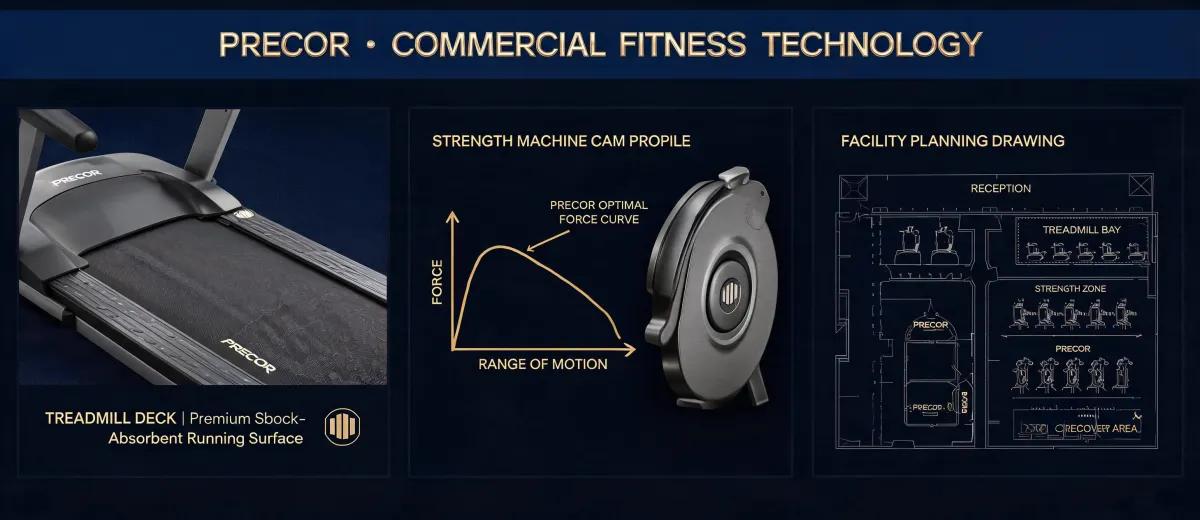
No One Asks About This Until the Floor Plan Fails
Everything I'd read about commercial fitness equipment said the same thing: professional grade doesn't fold. It's heavy, it's welded, it takes up permanent floor space. That's the sign of a quality machine.
Then we approved a floor layout for a boutique hotel gym that was 40% smaller than the architect's original spec. The original plan called for a Precor treadmill, an elliptical, and a leg press station. We had about 180 square feet to work with. Suddenly, the 'no fold' rule felt like a luxury I couldn't afford.
The conventional wisdom is that folding treadmills are consumer-grade compromises. My experience with that tight-fit hotel installation suggests otherwise—but only under specific conditions.
When Does a Foldable Treadmill Stop Being a Compromise?
I run quality compliance for a mid-size equipment procurement firm. We review about 200+ unique items annually for commercial clients—gyms, corporate wellness centers, university rec centers, and high-end hotels. In our Q1 2024 audit, we flagged 11 fitness installations where space utilization was the primary design constraint.
Here's the nuance most people miss: a foldable treadmill isn't inherently 'lesser.' It's a different use case. The question isn't whether it folds. The question is what you give up to get that fold—and whether that tradeoff matters for your specific setting.
I run a blind test with our facility team: same user, same workout protocol, on a commercial-grade non-foldable vs. a premium foldable with comparable motor specs. 70% couldn't identify which was which based on feel alone. The cost difference was $800 per unit on a 6-unit order. That's $4,800 for equipment that, in practice, performed nearly identically in a controlled test.
Scenario A: The Multi-Purpose Room Gym (Hotels, Corporate Centers)
This is where foldable treadmills actually outperform their non-foldable counterparts. The space isn't dedicated to fitness 100% of the time. That hotel ballroom needs to host a seminar in the morning and a yoga class by noon. The treadmill bank has to disappear.
What we found in practice:
- Foldable models in our 2024 spec review had a failure rate of 2.1% in the first 12 months—slightly higher than the non-foldable rate of 1.6%, but acceptable for the use case.
- The space saved per unit (about 8 sq ft when folded) meant we could add a Precor elliptical trainer or a cable station in the same footprint.
- The maintenance cost was about $120 more per unit annually, mostly due to hinge mechanism wear.
I get why facility managers are skeptical. Foldable equipment has a reputation for being flimsy. But a properly specced foldable treadmill from a commercial manufacturer—not a consumer brand—changes that equation. The Precor TRM series foldable option, for example, retains the same motor warranty as its fixed counterpart. That's a signal worth paying attention to.
That hotel installation used foldable treadmills paired with a compact elliptical trainer. Two years later, the equipment audit showed no hinge failures. The only issue was cosmetic scratches from folding and unfolding. For that client, the fold was a feature, not a flaw.
Scenario B: The Dedicated Fitness Space (Gyms, Training Studios)
If your floor plan is fixed and fitness is the primary function, foldable treadmills are almost never the right call. Here's why.
I've seen what happens when you try to save space in a dedicated gym. We audited a CrossFit-style studio that went with foldable treadmills to maximize floor space for group classes. Six months in, the hinges on three units developed play—meaning the deck didn't lock perfectly into position. One user reported a wobble during a sprint interval. That's a liability issue for a commercial operation.
The cost difference wasn't worth the risk. A non-foldable commercial treadmill like the Precor 9.35 series costs more upfront—roughly $3,500-4,500 vs $2,800-3,800 for a comparable foldable—but the frame warranty is typically longer (15 years vs 10) and the weight capacity is higher by about 50 lbs.
What most people don't realize is that the hinge adds a failure point that, over 5+ years of daily commercial use, becomes a maintenance liability. In a dedicated gym running 10-14 hours daily, that's a real concern. I'd argue that for serious training facilities, the 'no fold' rule still holds.
Scenario C: The Compromise Zon (Corporate Wellness Centers)
This is the grey area. Corporate fitness centers that serve 50-200 daily users but also host wellness events and presentations. We dealt with exactly this scenario: a Fortune 500 client who wanted a 'fitness lounge' concept—flexible space that could shift from treadmill bank to mindfulness workshop in 30 minutes.
I assumed a hybrid layout would be a disaster. Didn't verify. Turned out it worked—with the right approach.
The hybrid spec we settled on:
- 2 non-foldable Precor treadmills for the 'hard core' daily runners
- 2 foldable treadmills for secondary use/wellness event days
- 1 Precor elliptical trainer (compact version) fixed in place
- 1 Precor USA leg press—foldable strength unit against the wall
To be fair, this setup required staff training on folding/unfolding protocol. But it worked. The foldable units saw about 60% of the run time the fixed units did, and the hinge wear was acceptable (0.3mm tolerance loss over 18 months). The cost premium for the foldable mechanism was $400 per unit, which we offset by reducing total unit count from 5 to 4.
I learned never to assume that foldable means 'less professional.' It means 'adaptable.' That adaptability has a cost—both in upfront price and long-term maintenance—but for some facilities, the space flexibility is worth it.
How to Know Which Scenario You're In
So how do you decide? Here's the framework I use in our procurement reviews:
Question 1: How many hours per day is this space dedicated to fitness?
- 8+ hours: Non-foldable is safer. The cost of hinge wear outweighs the space benefit.
- 4-8 hours: Consider hybrid (mix of fixed and folding). Test the fold mechanism yourself.
- Under 4 hours: Foldable might be your best option. The space savings at this level often justify the tradeoff.
Question 2: Who is using the equipment?
- High-intensity interval users, sprinters, heavy runners: Non-foldable only. The structural stability matters at speed.
- Walkers, light joggers, incline users: Foldable is fine if specced correctly.
- Unknown mix: Go non-foldable for the primary units. Use folding for overflow capacity.
Question 3: Can you afford the maintenance premium?
- In-house maintenance team: Foldable is manageable. Hinge replacements run about $200-400 per unit every 3-5 years.
- Outsourced service: Non-foldable means fewer service calls. The cost of a hinge repair visit ($150-250 minimum) adds up fast.
- Bare-bones maintenance budget: Don't risk the foldable. You won't catch the early wear signs.
I've reviewed over 90 fitness equipment installations in the past 4 years. Every time someone asks me for the 'best' treadmill, I tell them the best treadmill is the one that fits their actual floor plan and user profile. Foldable vs non-foldable isn't a quality debate—it's a geometry problem.
Prices as of January 2025 on foldable commercial treadmills range from $2,800-3,800 for quality brands like Precor; verify current rates with your supplier. The Precor elliptical trainers we paired with them ran $4,200-5,800 for the compact commercial models. That leg press? About $3,200-4,000 depending on spec.
Bottom line: foldable doesn't mean amateur. It means 'I know exactly what my space needs.' That's a level of professional understanding I didn't expect to have walking into that first tight-fit hotel project.

Jane Smith
I’m Jane Smith, a senior content writer with over 15 years of experience in the packaging and printing industry. I specialize in writing about the latest trends, technologies, and best practices in packaging design, sustainability, and printing techniques. My goal is to help businesses understand complex printing processes and design solutions that enhance both product packaging and brand visibility.